Proposed new flag of Uasin Gishu County — green, white, gold bands with a shield and spears Current flag of Uasin Gishu County — green, white, gold bands with the county coat of arms OLD NEW
OLD — the current flag, bearing the county coat of arms. NEW — a proposed redesign following the principles of vexillology: legible at distance, bold from any angle, drawn from the county's own iconography. The shield and spear reference our role in national defence. Drag the handle to compare.

Mechanising.
Industrialising.
Digitising.
Kenya's food basket.

Uasin Gishu grows the food that feeds the nation — but loses a third of it after harvest, captures almost none of the value, and is losing arable land to unplanned sprawl. This plan is published in 2026 and executively adopted in 2042. In the sixteen years between, it is discussed, revised, and refined in public — so that when the mandate arrives, the framework is already written.

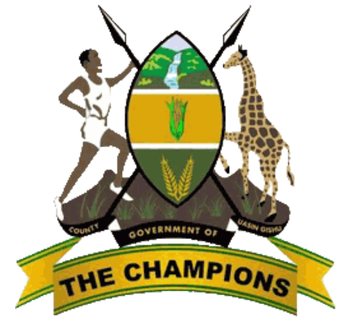
The coat of arms of Uasin Gishu County — Government of Uasin Gishu, The Champions
Plate I The coat of arms of Uasin Gishu County — The Champions. The plan below is written in its name.
Publisher
Samoei Kipchirchir
Published
2026 · in the public square
Adopted
2042 · execution begins
Horizon
2042 — 2062 · KSh 2T by 2062

Contents

  1. 01 The Baseline Where the county actually stands, in numbers.
  2. 02 The KSh 2 Trillion Target A 36-year arithmetic, from KSh 349B to KSh 2T.
  3. 03 Thesis Three moves, in sequence: stop the leak, add the margin, scale.
  4. 04 Tenets Seven commitments, with numbers.
  5. 05 The Network Six Agri-Industrial Cities, one system.
  6. 06 Growth Boundaries Protect the farms. Densify the city.
  7. 07 Defence & Manufacturing KOFC. CMZ-4. Drones. Moi Barracks air base. Arms exports at 15% of GCP.
  8. 08 Eldoret BRT Bus rapid transit linking every urban zone and AIC.
  9. 09 Sports & The Home of Champions Seven complexes. Four sports. One pipeline.
  10. 10 Agri-Industrial Cities Six specialised urban nodes.
  11. 11 Timeline Sixteen years of preparation. Twenty of work.
  12. 12 Follow the work A living document, revised annually.

01 — The Baseline

Where the county
actually stands.

Before a plan, a reckoning. These are the numbers Uasin Gishu starts from — the strengths, the leaks, and the constraints. Every ambition in this document is measured against them.

Production — what we grow

483,211 tonnes of maize harvested, 2024 Up from 476,538 in 2023. Highest in Kenya.
200,000+ hectares under maize, peak seasons Over 90% rain-fed. One harvest a year.
192,300 improved dairy cattle Across 99,000 smallholder farmers. ~80% of Kenya's formal milk output comes from the Rift Valley.
4,000+ aquaculture farmers Fish ponds and dam systems in Moiben and near Kaprobu. Target: 100,000 kg → 330,000 kg annually.

The leak — what we lose

~30% of maize lost post-harvest ~145,000 tonnes per year. No storage, no drying, no cold chain.
1.4% of national manufacturing GVA Agro-processing is limited in scale. Almost everything leaves raw.
0.54% manufacturing productivity growth Held back by energy costs and skills shortages.
40.4% of the population lives in poverty Per capita GCP trails the national average despite high output.

The economy — where the county sits

KSh 349B nominal GCP, 2023 7th largest county economy. 2.3% of national GDP.
~40% of GCP from agriculture Forestry and fishing add marginal value. Commercial grain farming drives the share.
~50% of GCP from services Wholesale, retail, transport, finance. Informal sector dominates private operations.
KSh 240K per capita GCP Below the national average of KSh 293K. Concentration of benefit in large-scale commercial operations.

The constraints — what gates everything

65% household electricity connectivity KPLC-managed. Target 95% by 2030 via Stima Mashinani.
60% target piped water coverage Depends on reservoir rehabilitation. 330+ dams desilted to date.
7–9% inflation range, 2023–2025 Raises input costs for fertiliser and fuel. Compresses agricultural margins.
5,863 tonnes of air cargo, mid-2025 3,961 export · 1,902 import. Eldoret International has capacity for 62,000 t/yr.

What the baseline reveals. The county already has the production, the livestock, the universities, and the airport. What it lacks is the infrastructure to keep what it grows — storage, processing, cold chain, power, water. The plan is not to grow more. It is to keep more, process more, and only then grow.

02 — The KSh 2 Trillion Target

KSh 349 billion today.
KSh 2 trillion by 2062.

The final number in this plan is not a slogan — it is a compound arithmetic over 36 years. Uasin Gishu's nominal GCP reached KSh 349.3 billion in 2023. Growing at roughly 4.9% real CAGR, it reaches KSh 2 trillion by 2062. For reference: Nairobi, the country's largest county economy, is at KSh 4 trillion today. The plan's goal is to close that gap to half of Nairobi's 2023 output within a generation.

2023 349B Baseline
2042 700B 2× baseline
2047 900B Term 1 complete
2052 1.3T Term 2 complete
2057 1.7T Term 3 complete
2062 2.0T Plan horizon

Composition of KSh 2 trillion, 2062

Sector 2023 2062 target Share
Agriculture raw + value-added 140B 500B 25%
Manufacturing & processing 15B 400B 20%
Defence & manufacturing cluster 300B 15%
Services trade, finance, logistics 175B 500B 25%
Construction, energy, tech, other 20B 300B 15%
Total 349B 2,000B 100%

The arithmetic. A 4.9% real CAGR over 36 years is ambitious but not fantastical. It is roughly what Kenya achieved nationally between 2005 and 2023, and roughly what counties like Nakuru and Kiambu are achieving today. The question is not whether KSh 2 trillion is reachable. The question is whether Uasin Gishu builds the storage, processing, defence, and mobility infrastructure that lets the county grow into it — or whether it stays at KSh 500 billion and calls that victory.

03 — Thesis

Three moves,
in this order.

Every county that tries to scale production before it can absorb it floods its own market and collapses prices. The sequence matters. Uasin Gishu's plan is three moves, done in order: stop the leak, add the margin, then scale.

Move 1 · Term 1

Stop the leak.

The county loses ~30% of its maize — roughly 145,000 tonnes every year — because there is no storage, no drying, no cold chain. That's more than the county's current export surplus. Build multi-acre storage in every AIC, and the marketable supply jumps without planting a single new hectare.

Before 30% post-harvest loss near zero

Move 2 · Term 2

Add the margin.

Raw maize sells at roughly KSh 40/kg. Flour sells at KSh 120/kg. Packaged, branded, exported product sells higher still. Same tonne, three to five times the value — and every step of that chain is a job in Uasin Gishu rather than Nairobi or Mombasa.

Before 1.4% of national manufacturing KSh 400B agri GCP

Move 3 · Terms 2–3

Then scale.

Now that the county can store and process what it grows, more production is profitable. Irrigate 200,000+ hectares. Rotate crops to protect the soil. Introduce improved seed, extension services, mechanisation. Two harvests a year where there is one today.

Before 484,000 tonnes, rain-fed 2,000,000 tonnes, irrigated

Why the order matters. Scaling production first floods the market, collapses prices, and destroys the farmer's incentive to plant. Building storage and processing first means every extra tonne lands in a market that can absorb it, at a price that rewards the farmer. Same ambition. Radically different outcome.

04 — Tenets

Seven commitments.

Each one is load-bearing. Remove any and the plan fails.

  1. i.

    Zero post-harvest loss.

    Multi-acre storage, drying and cold-chain capacity in every Agri-Industrial City. Today's ~30% loss — roughly 145,000 tonnes of maize a year — becomes tomorrow's margin. This is Move 1, and it costs the county nothing in new land.

  2. ii.

    KSh 500B agri GCP.

    Agriculture must contribute KSh 500 billion to the county's GCP by 2062 — up from roughly KSh 140 billion today — through value addition, processing, and export. The 1.4% national manufacturing share is the number that has to move.

  3. iii.

    Irrigate 200,000+ hectares.

    Transition the county's maize belt from rain-fed to irrigated — boreholes, dams, drip lines, canal rehabilitation. Two harvests a year where there's one today. Resilience against drought, predictability for the farmer.

  4. iv.

    2 million tonnes of maize.

    From 484,000 tonnes in 2024 to 2,000,000 tonnes — through irrigation, improved seed, extension services, and mechanisation. But only after storage and processing capacity exist to absorb it.

  5. v.

    Diversify the soil.

    Maize monoculture is depleting the county's soil — continuous cropping without rotation exhausts nitrogen and phosphorus. Every AIC-led zone rotates maize with wheat, pulses, potatoes and peppers. Soil health is a productivity input.

  6. vi.

    Six Agri-Industrial Cities.

    Not districts — cities. Ainabkoi, Kapseret, Kesses, Moiben, Soy and Turbo become fully-fledged secondary urban nodes, each specialised around its produce, each with housing, schools, health facilities, storage, and processing.

  7. vii.

    KSh 2 trillion GCP by 2062.

    The arithmetic of the first six, plus two new engines: defence manufacturing and BRT-enabled urban density. Roughly 5.7× today's KSh 349B, achieved not through one big bet but through compounding: agriculture, agritech, defence, mobility, and services all reinforcing each other. Eldoret becomes the administrative, financial, education and technology capital of the North Rift — with half of Nairobi's 2023 output.

05 — The Network

Six cities,
one agricultural engine.

Uasin Gishu's future is not a single city with farms around it. It's a network: Eldoret as the administrative and financial capital, ringed by six Agri-Industrial Cities — each a fully-fledged urban node with its own processing industry, storage, workforce, and civic function, each specialised around the produce of its zone.

Figure 1 The AIC network. Green marks the six Agri-Industrial Cities — Ainabkoi, Kapseret, Kesses, Moiben, Soy and Turbo — each a specialised secondary urban node. Red marks Eldoret's urban belt (Kimumu, Huruma, Langas, Kapsoya). Gold marks the CBD. Dashed lines show the network relationships between each AIC and the capital.
  • Agri-Industrial City
  • Eldoret urban belt
  • Eldoret CBD (capital)
  • Network link
i.

Why cities, not districts?

A district is a processing site. A city is a place people live, work, learn and raise families in. If the plan is to keep young people in Uasin Gishu instead of losing them to Nairobi, each AIC has to be a real urban centre — housing, schools, health facilities, entertainment, transport.

ii.

Each city, one specialism.

Ainabkoi on dairy. Kesses on research. Moiben on grain. Kapseret on horticulture. Soy on inputs and machinery. Turbo on poultry and logistics. Specialisation creates scale, scale creates competitiveness, competitiveness creates exports.

iii.

Eldoret becomes the capital.

Once the AICs carry the agricultural load, Eldoret is free to become what it should have been all along — the administrative, financial, education and technology capital of the North Rift. Banks, two public universities, Moi Teaching and Referral Hospital, county government, logistics headquarters.

iv.

Connected by design.

Rail and road links between every AIC and Eldoret. Cold chain between AICs and the Eldoret International Airport for export. Digital network for agritech data. The county becomes one operating system, not six disconnected towns.

06 — Growth Boundaries

Protect the farms.
Densify the city.

Eldoret's real-estate boom is quietly consuming the county's arable land. Subdivisions creep outward from the CBD, converting farmland into plots that never return to production. The fix is not to stop growth — it's to direct it. Two zones: everything inside Eldoret densifies; everything inside the AIC network is protected agricultural land.

Zone A

Protected agricultural land.

Six Agri-Industrial Cities — Ainabkoi, Kapseret, Kesses, Moiben, Soy and Turbo — plus their surrounding zones. Legally designated as agricultural. Subdivision for non-agricultural use is not permitted inside these boundaries. Each city is a processing and habitation node; the land around it stays in production.

  • Legally protected arable land
  • County-funded irrigation and boreholes
  • Multi-acre storage in every AIC
  • Cold chain + export corridor access
Zone B

Eldoret's urban belt.

Everything radiating from the CBD — Kimumu, Huruma, Langas and Kapsoya — is where real-estate growth is actively encouraged. Apartments, mixed-use, serviced plots, BnB corridors, and rental density. Build up, not out. The belt absorbs the urban demand that would otherwise convert farmland elsewhere.

  • Density bonuses for vertical construction
  • Infrastructure-first: water, power, BRT
  • Fast-tracked approvals inside the belt
  • No new subdivisions outside it

The logic in one line. If Eldoret doesn't offer enough dense, serviced urban land, the market will keep sprawling into the farms. The urban belt is not just a real-estate plan — it's the mechanism that makes agricultural protection possible.

07 — Defence & Manufacturing

A defence industry,
built for export.

The Kenya Ordnance Factories Corporation already operates in Uasin Gishu. Taita Taveta holds Kenya's only CMZ-4 rifle line. And the country imports almost every drone it uses for defence, surveillance and counter-banditry operations. Uasin Gishu becomes the second site for all three — and the base of an arms-and-services export industry contributing 15% of the county's GCP and 50,000+ direct jobs by 2062.

i.

KOFC, at full capacity.

The Kenya Ordnance Factories Corporation was established to produce small arms, ammunition and related materiel for the Kenya Defence Forces and National Police Service. Its Eldoret facility exists. It does not run at capacity.

The plan is not to build a new factory. It is to expand the one already in the ground — full utilisation, second shift, modernised tooling, expanded ammunition and small-arms lines, and a dedicated supply chain for raw materials and components sourced within the county.

ii.

A second CMZ-4 line.

The CMZ-4 is Kenya's standard-issue assault rifle, produced by the Kenya Ordnance Factories Corporation at its Taita Taveta facility. Single-source production is a strategic vulnerability — natural disaster, industrial accident, or targeted disruption halts the supply.

Duplicate the CMZ-4 line into Uasin Gishu so the country has two independent production sites for its service rifle. Strategic redundancy, distributed risk, and a skills cluster of armourers, machinists and quality engineers that benefits every other manufacturing sector in the county.

iii.

Drones, built here.

Kenya currently imports almost every uncrewed aerial system it uses — for reconnaissance, counter-terrorism, counter-banditry operations, border surveillance, and counter-smuggling on the northern and eastern frontiers.

Uasin Gishu, sitting inside the Rift Valley's emerging tech corridor and adjacent to two public universities, is the natural site for a domestic drone manufacturing cluster — fixed-wing and multi-rotor ISR platforms, sensors, ground control stations, and the software stack that ties them together.

iv.

Moi Barracks — expanded.

Moi Barracks becomes more than an infantry base. The expansion includes an Air Base — rotary and light fixed-wing capability for regional deployment and disaster response — plus a cluster of R&D schools: a Defence Technical College, an Aerospace and Systems Institute, and a partner programme with Moi University and University of Eldoret for embedded systems, materials, and cyber.

Soldiers trained here become the engineers who staff the factories, the test pilots who validate the drones, and the instructors who train the next cohort. The base and the industry feed each other.

v.

Arms and services for export.

Kenya is already a continental exporter of defence services — peacekeeping, training, security consulting. Uasin Gishu manufactures the hardware that makes those services credible, and then sells both to regional partners: AMISOM successor missions, EAC member states, and bilateral arrangements with countries seeking alternatives to traditional suppliers.

Product lines: small arms and ammunition, ISR drones, ground control systems, spares and sustainment, and training services delivered through the R&D schools at Moi Barracks.

vi.

Spillover into civilian industry.

Precision machining, electronics assembly, embedded software, quality assurance — the same capabilities that build a rifle or a drone build an irrigation controller, a cold-chain sensor, or a farm-machinery gearbox. Defence-industrial capability is not a parallel economy. It is the top tier of the same economy.

Once it exists, agritech hardware manufacturing becomes cheaper, faster, and more locally sourced. The county gets two export industries for the cost of building one.

15% of county GCP from defence & manufacturing by 2062
50,000+ direct jobs in the defence-industrial cluster
≥ 2 CMZ-4 production sites, nationally
3 R&D schools: Technical, Aerospace, Cyber

Why this belongs in an agricultural plan. Defence-industrial capability is not a contradiction of agri-industrial development — it is the same capability, applied to a higher-margin product. Precision manufacturing, electronics, embedded software and quality assurance are the same skills that build an irrigation controller, a cold-chain sensor, or a farm-machinery gearbox. A county that can build a drone can build an agritech hardware industry. And a county that can sell both to the world has two engines instead of one.

08 — Eldoret BRT

A city that moves
as one system.

Eldoret's urban belt is densifying — apartments, mixed-use, serviced plots. That density only works if people can move through it without a car. Bus Rapid Transit is not a phase-two upgrade. It is the spine of the urban plan from day one. And it doesn't stop at the city limits — every route ties into an Agri-Industrial City so workers, produce, and goods flow both ways.

Line 1 · Red

CBD ↔ Kimumu ↔ Kapsoya

Eastern urban belt · 14 km

Serves the eastern densification corridor: Kimumu, Kapsoya, and the CBD. Trunk route with dedicated lanes on the A104 approach. Highest early ridership — anchors the network's business case.

Line 2 · Blue

CBD ↔ Huruma ↔ Langas

Western urban belt · 17 km

Serves the western belt: Huruma, Langas, and the CBD. Connects to the Eldoret–Malaba corridor. High-density residential catchments on both ends.

Line 3 · Green

CBD ↔ Kesses ↔ Moiben AIC

Northern agri-corridor · 42 km

Links the CBD to Kesses (research anchor, Moi University) and Moiben AIC (grain, storage, milling). Commuter flow both ways: workers to the city in the morning, students and produce outward all day.

Line 4 · Gold

CBD ↔ Ainabkoi ↔ Soy AIC

North-east agri-corridor · 38 km

Links the CBD to Ainabkoi (dairy) and Soy (inputs and machinery). Feeds the urban workforce into the two northernmost agri-industrial cities. Freight integration at both terminals.

Line 5 · Silver

CBD ↔ Kapseret ↔ Turbo AIC

Southern export corridor · 54 km

Links the CBD to Kapseret (horticulture, packing) and Turbo (poultry, logistics) on the Eldoret–Malaba highway. A dedicated BRT lane replaces what is now gridlocked truck traffic — moving people and perishables on the same corridor.

Feeder · Network

Ward-level feeders

Trunk-to-door network

Every BRT trunk station becomes a feeder hub. Electric minibuses and shuttles connect the trunk to ward-level catchments. Ticketing is unified: one card, one payment, trunk and feeder combined. The last mile is not an afterthought.

The principle. A city that builds itself around cars commits to sprawl. A city that builds itself around BRT commits to density — and density is what protects the farms beyond the urban boundary. The BRT is not a transport project. It is land-use policy in physical form.

09 — Sports & The Home of Champions

Seven complexes.
Four sports. One pipeline.

Eldoret is called the Home of Champions — but that reputation was earned by athletes who overcame the absence of facilities, not because of them. Uasin Gishu has one county stadium, a handful of training grounds, and a global reputation. The plan turns reputation into infrastructure, and infrastructure into an industry. One sports complex in every constituency, across four sports where Kenya is already a force — and can become dominant.

The network · Seven complexes

Eldoret · Existing

Kipchoge Keino Stadium

Refurbished to international standard. Track and field primary, secondary capacity for rugby sevens.

Eldoret · Existing

64 Stadium

Upgraded as the football and athletics hub of the CBD's eastern belt. Anchor for youth leagues.

Ainabkoi

Ainabkoi Sports Complex

Football-first. Full-size pitch, training pitches, clubhouse. Anchors the north-east corridor.

Kapseret

Kapseret Sports Complex

Basketball and volleyball. Indoor court, outdoor courts, community programming.

Kesses

Kesses Sports Complex

Rugby-first. Adjacent to Moi University. Sevens hub with university league pipeline.

Moiben

Moiben Sports Complex

Athletics-first. Altitude training facility, dormitories, and a coaching academy.

Soy

Soy Sports Complex

Football and athletics. Serves the north corridor, connects to the Ainabkoi pipeline.

Turbo

Turbo Sports Complex

Multi-sport. Football, basketball, athletics. West-facing gateway to the Malaba corridor.

The four codes · Where we become dominant

i.

Athletics

The foundation — already global

Kenya's dominance in distance running is the strongest sports brand the country has. The plan extends it — from middle-distance to sprints and field events — through altitude training camps at Moiben, dedicated coaches, and a county-wide youth trials system that identifies talent at 12, not 18.

ii.

Football

The mass sport — the one to build

Kenya has the population, the passion, and the raw talent. What it lacks is facilities and systematic youth development. Seven football-capable complexes across the county, each running an under-12, under-15, under-18 pipeline, feeding a county select side and ultimately the national team.

iii.

Basketball

The fastest-growing — the one to seize

Basketball in Kenya is on an upward curve. The NBA's Africa programs and the BAL have created a visible pathway. Kapseret becomes the county's basketball hub — indoor and outdoor courts, a competitive league, and a partnership with the universities to develop coaches and referees.

iv.

Rugby

The one with the best foundation

Kenya Sevens is a world-recognised brand. Kenya Rugby Union has a stable domestic structure. Kesses becomes the sevens hub, adjacent to Moi University, feeding the national sevens pipeline and hosting an annual tournament that draws regional teams.

7 sports complexes, one per constituency
4 sports codes: athletics, football, basketball, rugby
12 age talent is identified — not 18
Dominant at African level by 2057, in all four codes

Sport is an industry, not a pastime. Athletes are exports. Sports tourism is revenue. Complexes are real estate. Academies are education. Every one of those is GCP. And unlike most industries, sports has a second dividend — a healthy, disciplined, ambitious generation that stays in the county because the pathway to a professional career is visible from their village. We build the complexes, and the champions come. Or — more accurately — we build the complexes, and the champions stop having to leave.

10 — Agri-Industrial Cities

Six Agri Cities.
One template each.

Each Agri-Industrial City follows the same physical template: a multi-acre processing and storage campus, a residential core, civic infrastructure, a BRT terminal, and a transport node linking it to Eldoret and the national corridor. What changes is the produce specialism.

AIC-01

Ainabkoi

Dairy & animal feed

Regional milk processing, feed mills, cold chain, veterinary hub. Anchored by the county's 192,300 improved dairy cattle across 99,000 smallholders — the Rift Valley's ~80% share of Kenya's formal milk output starts here.

AIC-02

Kapseret

Horticulture & export packing

Cut flowers, vegetables, avocado — cold chain, packing houses, direct air-freight link via Eldoret International. The KSh 302M packing house investment (2024) for avocados, passion fruit and edible oils is the anchor.

AIC-03

Kesses

Research & agritech

Adjacent to Moi University (52,000 students) and University of Eldoret. Soil science, seed trials, sensor pilots, agritech assembly. The 40 MW Alten solar facility (2023) already proves renewables at county scale.

AIC-04

Moiben

Grain & open-field crops

Maize, wheat, barley — multi-acre grain storage, drying, milling, malting. The county's largest contiguous grain-producing zone. Post-harvest loss reduction begins here.

AIC-05

Soy

Agri-inputs & machinery

Seed multiplication, fertiliser blending, irrigation equipment assembly, small-farm machinery manufacturing. Feeds every other AIC with the tools to farm.

AIC-06

Turbo

Poultry & export logistics

Poultry, eggs, feed mills — plus cold-chain and container staging on the Eldoret–Malaba corridor to Uganda, Rwanda and the DRC. The west-facing export gateway.

Together with Eldoret as administrative and technology capital, these six cities form the county's urban and land-use framework for the next twenty years. Request the full plan →

11 — Timeline

Sixteen years of
preparation. Twenty of work.

This document is published in 2026, but the plan is for 2042 — the year the framework is adopted and execution begins. Between now and then, the work is advocacy, revision, and public discussion. Some groundwork may start organically, in alignment with what's written here. That's the point: the plan is ready before the mandate is.

  1. Pre-publication 2026 — 2042

    In the public square.

    No execution. No ground broken. This is the phase in which the plan is written, published, challenged, revised, and refined. Any groundwork that begins before 2042 does so because others adopt parts of the framework — not because this plan commands it.

    • Plan published, read, and revised annually in public
    • Public consultation across all six AIC zones
    • Technical review by agricultural, industrial, and urban experts
    • Costing and financing studies for each phase
    • Alignment tracked with any county or national initiatives
  2. Term 1 2042 — 2047

    Foundation — stop the leak.

    • Land-use framework adopted — Zone A / Zone B boundaries fixed
    • Multi-acre storage breaks ground in first three AICs
    • Irrigation programme begins — boreholes, dams, drip
    • BRT Lines 1 & 2 (Kimumu–Kapsoya, Huruma–Langas) break ground
    • County Agri Research Institute established
    • Corridor studies finalised: rail links, airport cargo, inland port
    • KOFC capacity expansion and Moi Barracks air-base assessment begins
  3. Term 2 2047 — 2052

    Build — add the margin.

    • All six AICs operational — storage, processing, housing
    • Post-harvest loss trending toward zero
    • Maize milling and dairy processing at industrial scale
    • BRT Lines 3, 4, 5 (to Kesses, Ainabkoi, Kapseret, Turbo) complete
    • Eldoret–Iten at two lanes each way
    • Kimumu upgraded to UGIA — regional cargo flights
    • Inland container port breaks ground
    • Second CMZ-4 line and drone manufacturing cluster approved
    • Moi Barracks air base under construction; R&D schools opened
    • Sports complexes break ground — Ainabkoi, Kapseret, Kesses, Moiben
    • First county-wide youth trials in all four codes
  4. Term 3 2052 — 2057

    Scale.

    • 200,000+ hectares irrigated
    • Maize output at 2 million tonnes
    • Agri GCP at KSh 500B; defence & manufacturing at 15% of county GCP
    • 50,000+ direct jobs in the defence-industrial cluster
    • Arms and services export programme operational
    • Inland port handling 100k+ TEU annually
    • KOFC at full capacity; second CMZ-4 line operational
    • County GCP crossing KSh 1.7 trillion
    • All seven sports complexes operational
    • County competitive at national level in football, basketball, rugby
  5. Beyond 2057 — 2062+

    Consolidate.

    • Uasin Gishu as East Africa's agritech and defence manufacturing hub
    • County GCP reaching KSh 2 trillion by 2062
    • Arable land protected for the next generation
    • Eldoret as the Rift Valley's technology and administrative capital
    • The next generation inherits a platform, not a project
    • Uasin Gishu dominant at African level in athletics, football, basketball, rugby

12 — Follow the work

Built in public.
Sixteen years early.

This is a living document. If you want to watch it evolve, contribute expertise, or challenge a number — leave your email. No campaigning, just the plan.